HOW TO| How to put a wetsuit properly on by Emma Pallant
Tips & Tricks
August 13, 2018
Welcome to our latest post! Today we are with another member of the BMC-Vifit Sport Team powered by Uplace, none other than Emma Pallant, silver medal...
Rotating the body correctly while swimming is difficult for triathletes who are not natural swimmers and who have more...
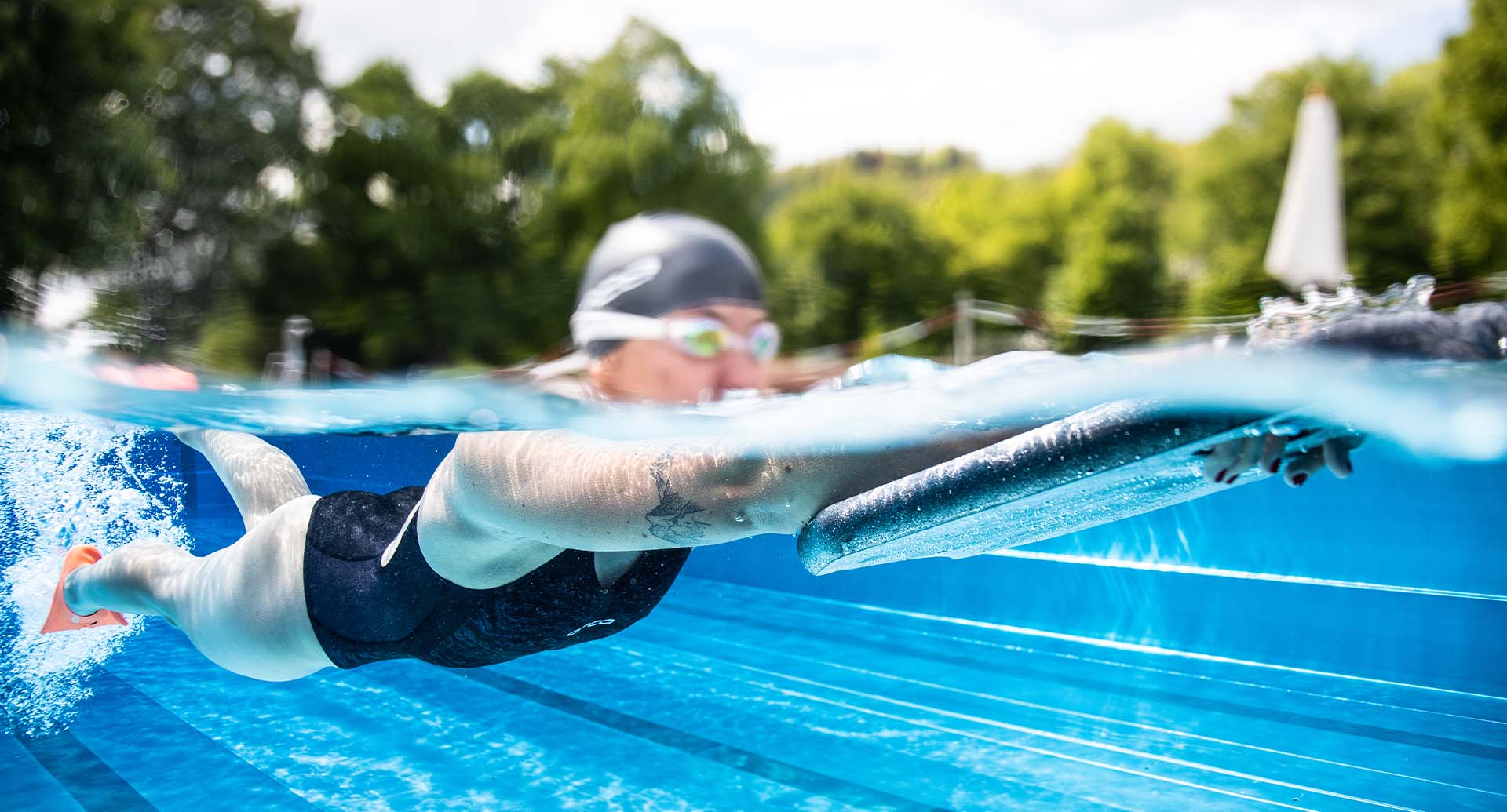
Rotating the body correctly while swimming is difficult for triathletes who are not natural swimmers and who have more difficulty keeping their lower body aligned with the rest of the body.
As with previous posts, Liz Blatchford will show us how she trains for balance and body rotation to avoid this rigidity with three basic drills, which require fins and a snorkel.
1. Back Rotation Kick
The first drill consist of rotating on your back. To do this, just use the fins and keep your arms still at your sides, moving forward with just the movement of your legs. As you move forward, first take one shoulder of the water, and then the other, successively as shown in the photos.

2. Front Rotation Kick (6 kick roll)
For the next drill, you will be using the snorkel since your body will be facing down and moving forward the same way that you would while swimming freestyle. Again, your arms are going to be still at your sides and you will rotate by pulling your shoulders out of the water.

3. 6 Kick switch
For last drill, you will keep the same position as in the previous drill, but this time extending one arm. Switch arms every six kicks. The photo shows how to hold the position.

Although it often goes unnoticed by athletes, body rotation is a key component of a good swimming technique. Not only can it improve your body positioning, but it also helps widen your movements in your strokes. With these drills, you can achieve an optimal position that will make swimming easier.
August 13, 2018
Welcome to our latest post! Today we are with another member of the BMC-Vifit Sport Team powered by Uplace, none other than Emma Pallant, silver medal...
August 7, 2018
When you swim, both your body's position and the way that you balance affect the way that your body glides through the water. Once again, we asked...
July 23, 2018
At Orca, we are turning to Chris Leiferman again who is showing us some tricks for choosing the proper size wetsuits from the Orca range. In the belo...
You are currently on the International website. We recommend you choose your country so you can complete an online purchase.
Sign up to our newsletter and join the Orca community
Adjust your communication preferences in your account settings
Close
| Responsible | Orbea, S . Coop. Info |
| Purpose | User account management Info |
| Authentification | Consent of the interested party. Info |
| Recipient | We will not share your data with any third parties, unless we are legally required to do so. <a :link>Info</a> Info |
| Rights | Your right to access, rectify and delete your personal data, among other rights, as explained in the additional information Info |
| Additional Information | For additional, detailed information on Data Protection, refer to: :link /en-int/p/privacy-policy |
For best results, take your measurements with no clothing on
Place the measuring tape over the widest part of your chest.
Hold one end of the measuring tape in place and circle your chest, keeping the tape straight, until the tape reaches your starting point.
Get a book, a hand mirror and a pencil.
Take off your shoes and anything you wear on your head.
Look for a level surface to stand on with a smooth wall behind you.
Stand in front of the wall with your feet together.
Balance the book on your head and press it against the wall. Use the mirror to check that it is in a horizontal position and well centered. Mark the position of the top of your head on the wall with pencil.
Once the mark is made, step away and use a measuring tape to measure the distance from the ground to the mark you just made with pencil.
Step on the scale, without clothes or accessories, and write down your weight.
Your session has ended due to inactivity. You can close this message and continue browsing normally.