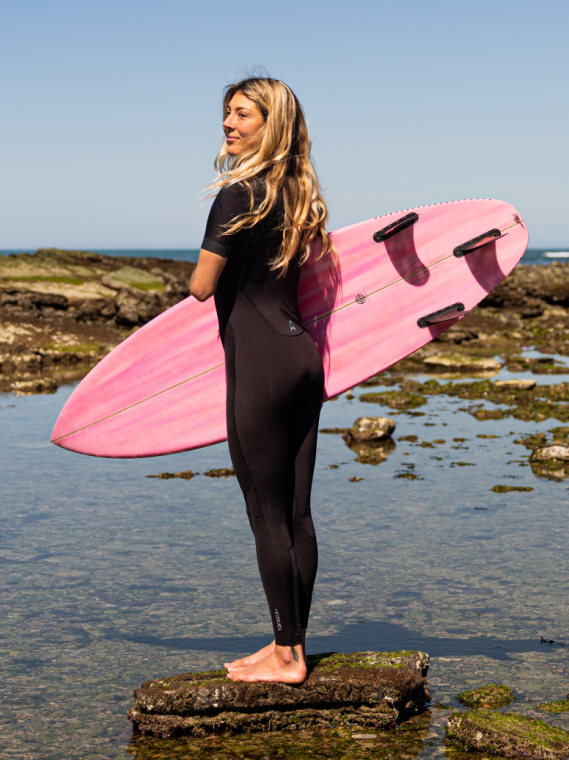
Tara's essentials
October 13, 2025 | 10 reading min.
Tara Andreani shares her passion for surfing, her routines with Orca and how the sea brings her a sense of balance and self-confidence.
Juan Merodio shares his experience of La Vaca Gigante and surfing big waves, involving adrenaline, a respect for the sea and years of experience.
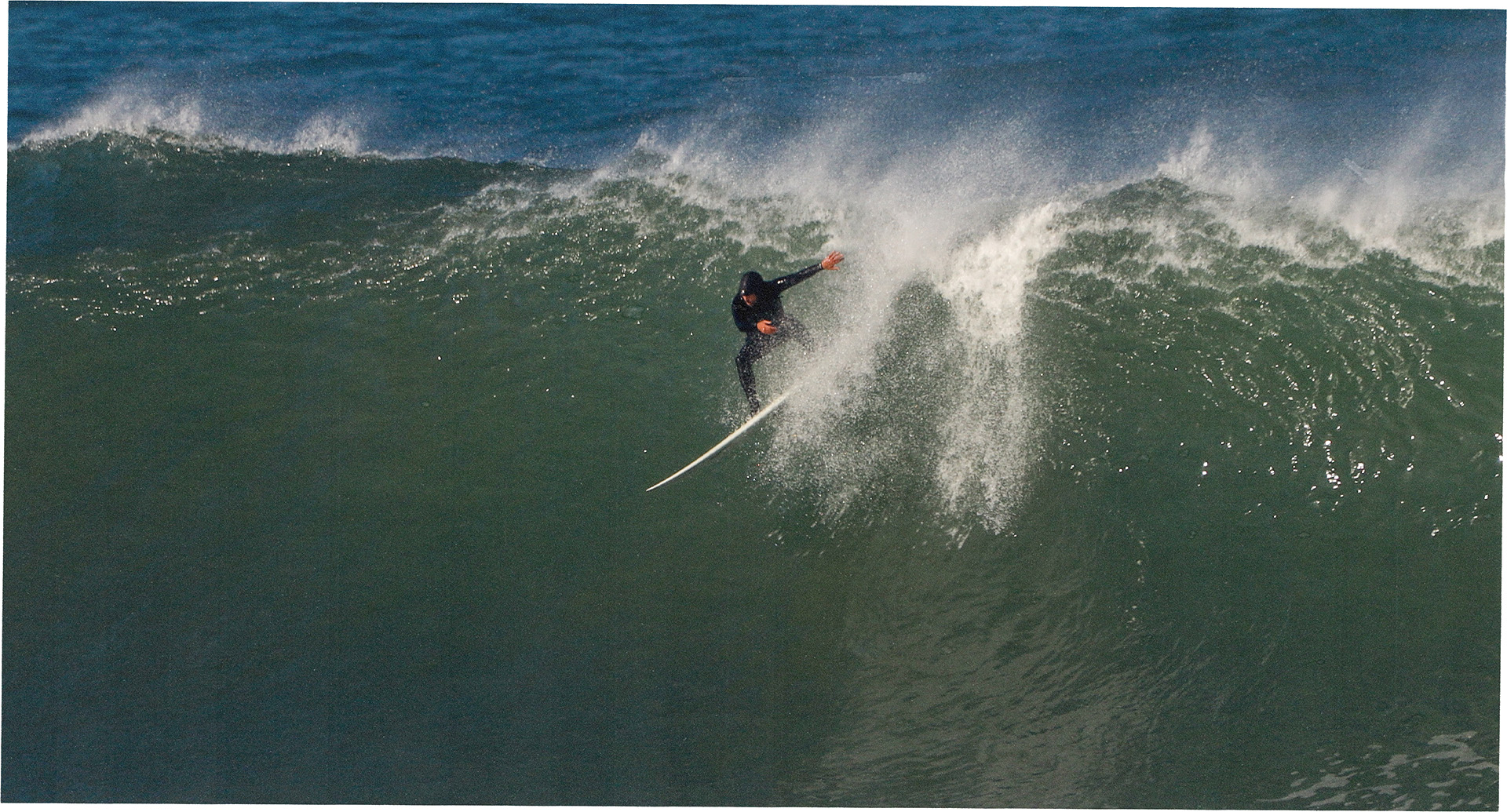
Juan Merodio has an intimate connection with the sea. The 33 year old Cantabrian surfer, son of pioneer and shaper José Manuel Merodio, grew up to the sound of the Cantabrian sea, which directed his life’s rhythm. He started surfing when he was seven, competing as a child, and over the years, thanks to teaching at the Gliding Surf School, he discovered a way to teach not only technique, but an entire philosophy surrounding the ocean. His life is deeply linked to his family, but also to a region where the swells form part of the emotional landscape: the Costa Quebrada.
This very same region hosts La Vaca Gigante, one of the most important big wave events in Europe. The competition takes place in the Parque Las Canteras-Cueto, within the UNESCO Global Geopark of Costa Quebrada, an area of exceptional geographical worth where the force of the sea is much stronger. In just a few seasons, La Vaca Gigante has become the only extreme surfing event celebrated in Spain, having made its name as the go-to event for big wave surfers and for surf fans who want to witness more than just a competition: a show of respect, technique and coexistence with a powerful sea.
What makes this event special isn’t just its international prestige, but its commitment to the planet. The United Nations certifies that the competition has fully offset its carbon dioxide footprint, making it a climate-neutral event. But the essence of La Vaca lies in the wave that gives it its name - one that’s unpredictable, changing and capable of reaching a height of six or seven metres when the deep squalls and winds align. Competitors surf a peak where opposite wave directions converge, which demands observation, intuition and total concentration. In order to take advantage of this spectacle in all its glory, the organisation works with an alert system based on a long waiting period which comprises a whole year, officially becoming active only when, with a week’s notice, nature confirms that the time has come.
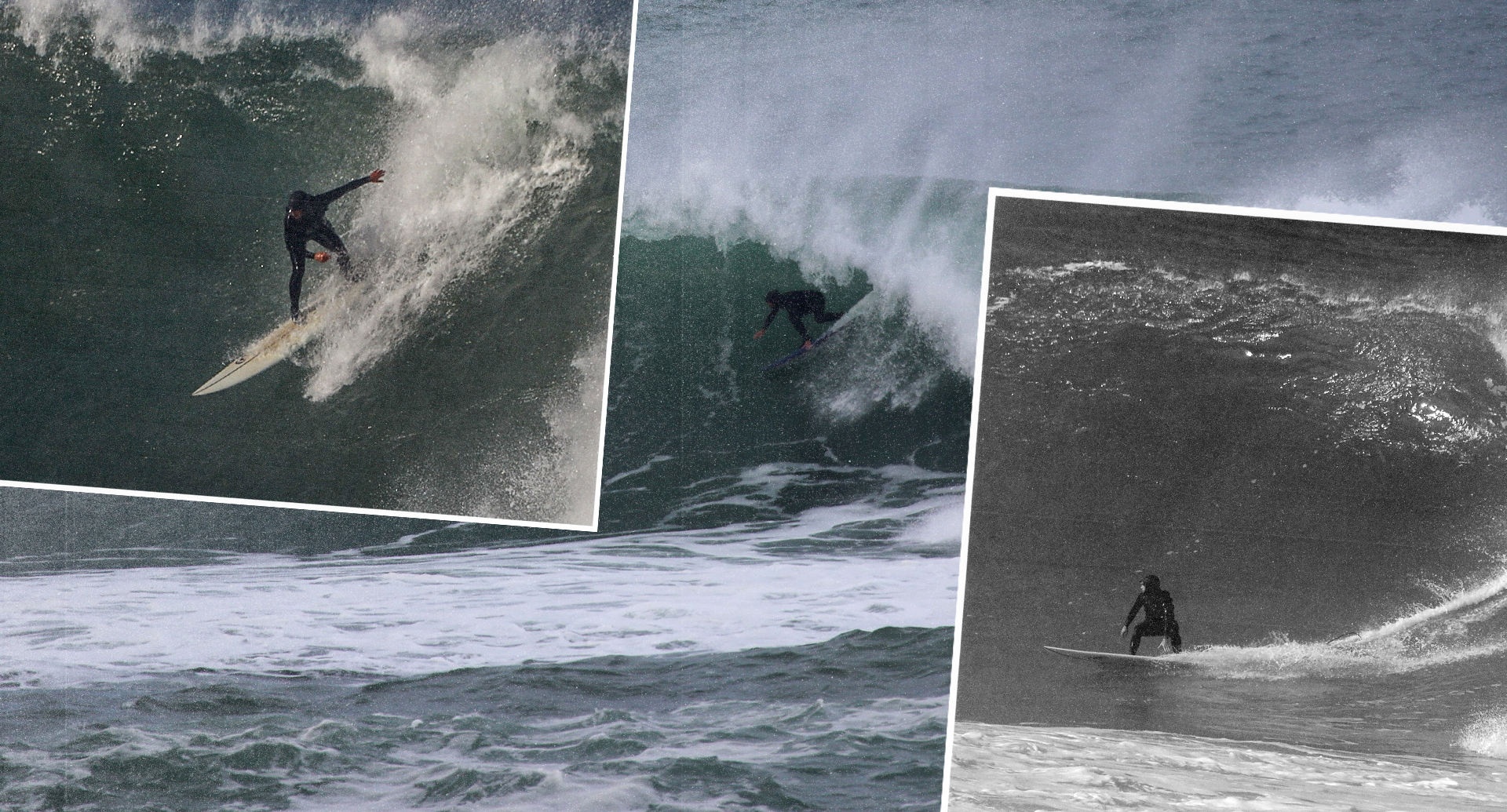
Juan’s relationship with La Vaca started very early on. He could see the break from his home and always felt there was something special about it. At just 16 years old, he spontaneously joined the 2008 competition on the day of the event. He basically took part out of intuition, sharing the water with surfers such as Axi Muniain, Indar Unanue and David Echague, and discovering for the first time what it really meant to surf big waves. He remembers La Vaca as a wave with pinpoint accuracy: as the waves from different directions converge, the impact zone changes constantly, obliging the surfer to maintain a precise positioning and constant observation of the sea.
Despite the high level required to surf here, Juan confesses that he doesn’t follow a structured training programme out of the water. His preparation consists of spending hours in the sea, paddling a great amount, seeking out demanding conditions and catching as many waves as possible. Lately he’s started to consider incorporating more specific freediving and strength-resistance routines into his training, which are fundamental for keeping up a high level over the years. In terms of equipment, he alternates between 7’9’’ and 9’6’’ boards, without giving it much more thought. For Juan, the most essential part of it all is to feel confident in yourself and safe in the water, and when he thinks of the ideal Orca wetsuit, he imagines the perfect combination of mobility, thermal protection and durability for paddling in tougher swells.
His strategy in the water, whether it’s during La Vaca or at Punta Galea, doesn’t change too much: he tries to catch lots of waves, choosing selectively but without waiting too long for the perfect wave. He says he hugely admires those who have the patience to do so, such as Nano Riego or Natxo González, but he himself prefers to stay active, in constant movement. He knows that the waiting period adds uncertainty, but he’s learned that the best way to be prepared is to stay connected with the sea during winter - including going in even when the conditions are unpleasant, without fail, and taking advantage of every swell to fine tune your sensations, strength and mind.
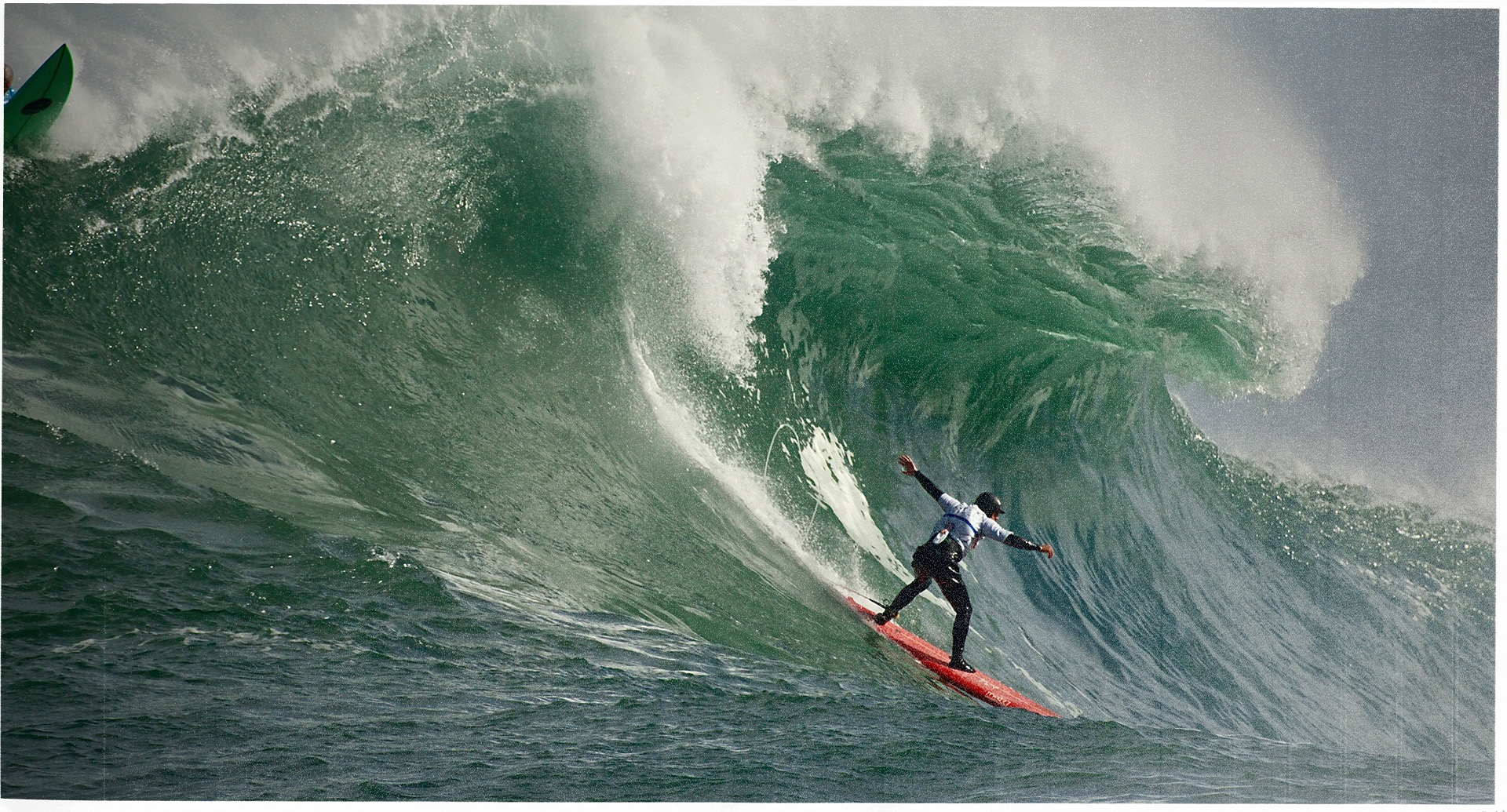
Some of his most intense memories are from the 2008 edition, given it was his first time, and the 2023-2024 edition, where he reached the final but his board was broken by the first wave. Despite this, he has fond memories of the day. Matt Etxebarne quickly came to his rescue on a jet ski and the story lives on as one more anecdote in a sport where the unexpected is just a part of the experience.
Juan also reflects on the role of sustainability in surfing. He believes it shouldn’t just be associated with the sport, but a broader individual responsibility, including reducing consumerism, informing ourselves about our impact on the environment and contributing what we can in our day to day. He believes La Vaca can help to raise collective awareness, but insists that real change begins with each individual.
Regarding safety, he admits there’ve been huge advancements, especially in terms of what the jet skiers do, whose experience is crucial. The main thing is to avoid putting commercial or political interests before safety and enjoyment. When he considers the future of surfing, he’s optimistic: figures such as Laura Coviella or Natxo González, combined with the extremely high level of surfers in the Canary Islands and the Basque Country, are paving the way for new generations to explore the world of surfing.
When asked what advice he would give to someone who wants to make the jump from average size waves to giant ones, he smiles: “Don’t go straight into it.” For him, it’s a slow and continuous process that requires patience, years of experience and a deep understanding of one’s own limits. It’s not about diving into the unknown, but about moving forwards without rushing, respectfully, while always listening to the sea.

October 13, 2025 | 10 reading min.
Tara Andreani shares her passion for surfing, her routines with Orca and how the sea brings her a sense of balance and self-confidence.
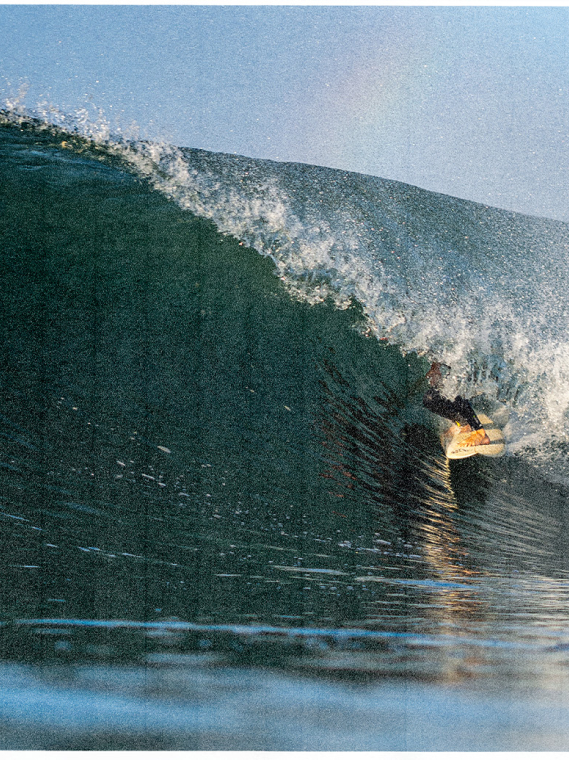
July 21, 2025 | 7 reading min.
A new and improved version of our high performance wetsuit, with or without hood
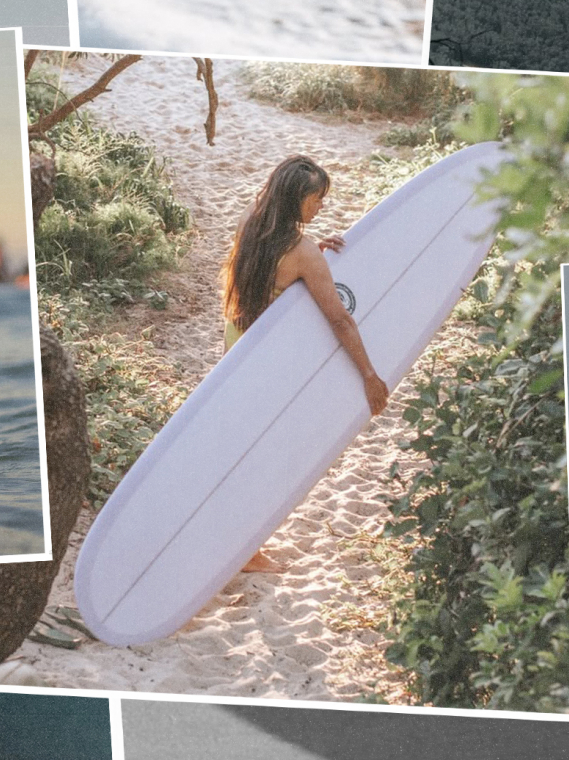
April 1, 2025 | 15 reading min.
Discover how surfing and photography have transformed the life of an Argentinian woman based in Australia